From the Studio · Performance Artistry
The Stage Is Not a Test.
Somewhere along the way, many musicians learn to walk onto a stage the way you walk into an examination room — braced, apologizing in advance, hoping to get through it. That is not what a stage is. A stage is where the work is finally for somebody.
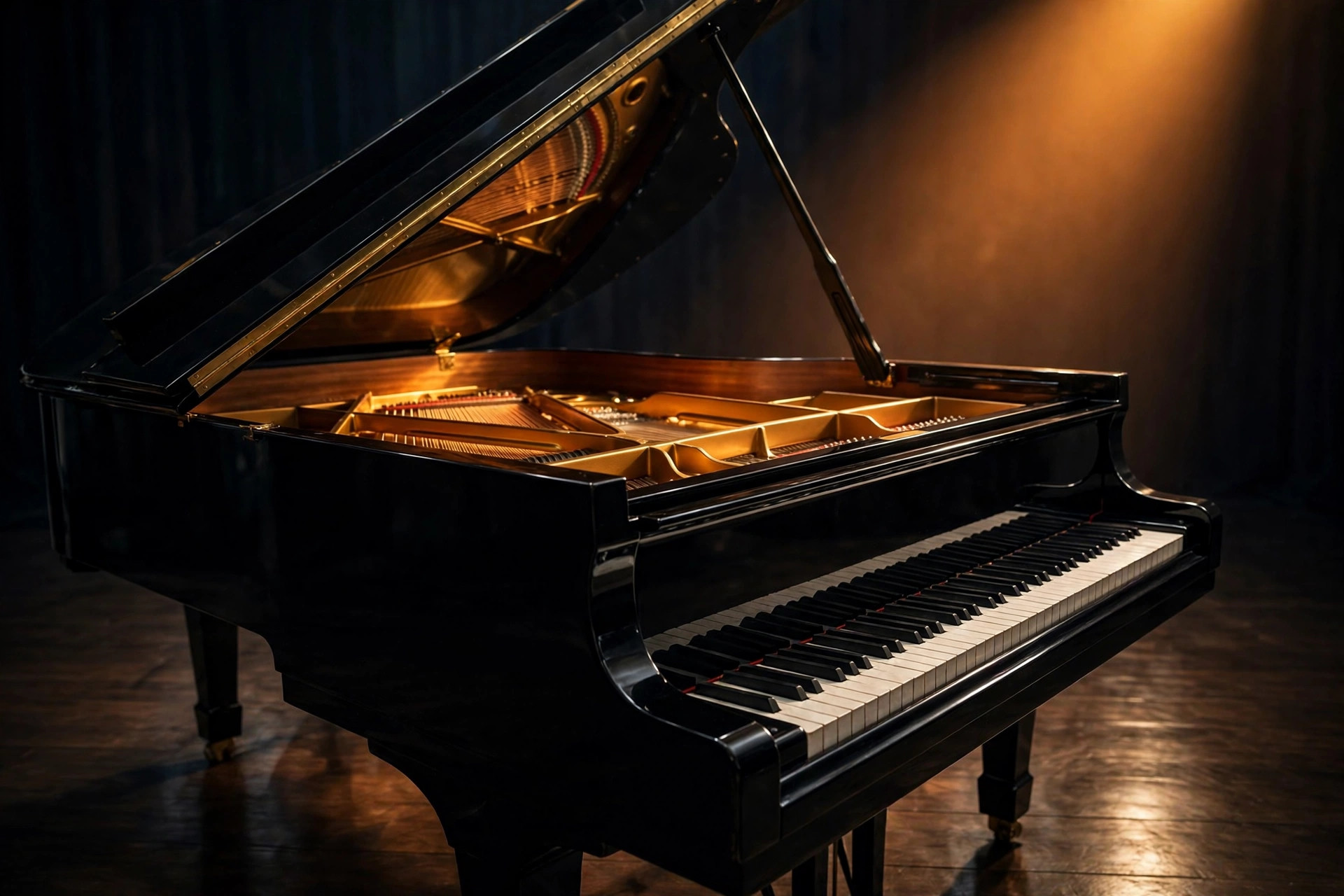
The instrument at the center of the work. Photographic plate from the Studio's own collection.
The short answer: performance artistry — the fourth pillar of the Patterson Arts Method — is learning to communicate with conviction. You prepare thoughtfully, you carry your musical voice onto the stage, and you treat the stage not as a test to survive but as the reason for the work. Nerves do not disappear under that conviction. They change jobs: from judges into fuel.
Preparation is where conviction is made
No one communicates freely with a piece they are still negotiating with. That is why the other pillars come first: technical freedom, so the body is at ease; musical understanding, so the student knows what the music is doing and what they want to say with it; purposeful practice, so each session closes the distance between the sound heard inside and the sound the hands can make. By the time a performance is near, the question is no longer "can I play this?" It is "what am I here to say?" — and that is a question a musician can walk onstage with.
An audience is not a jury
People do not come to a recital hoping to catch a mistake. They come to be moved — to hear something true said in sound. The performer who remembers that stops playing at the audience's judgment and starts playing for their listening. Two students can play the same nocturne correctly and say entirely different true things with it; the stage is where that difference is the whole point. Correctness is the floor. Communication is the work.
What we practice toward the day
Performance is practiced like everything else here: in small, deliberate decisions. Play the opening for one trusted listener. Then for three. Learn how the room changes the sound and how your attention answers it. Qualifying advanced students here prepare for our annual recital at Carnegie Hall — a real stage, with real stakes — and the preparation is the same at every level: thoughtful, honest, and aimed at the listener from the first run-through. The stage is not a test to survive. It is the reason for the work, and students who learn that early carry it for the rest of their musical lives.
Study at the Studio
Personal piano and voice study in St. Augustine and live online, worldwide: private study, theory and aural training, composition, and invited masterclasses — with lessons and masterclasses on Steinway Model D concert grands. Placement begins with a conversation and a careful review, so the plan fits the musician, not the catalogue.
Begin with a placement review · Explore the Studio · The Patterson Arts Method