Musical Understanding · The Patterson Arts Method
Listening Before Reading: Why the Ear Leads
Ask a student to read a phrase they have never heard and you are asking two things at once: decode the page, and imagine the music. Ask them to hear it first — sung, played, felt in the body — and the page becomes something kinder: a map of a place they have already been.
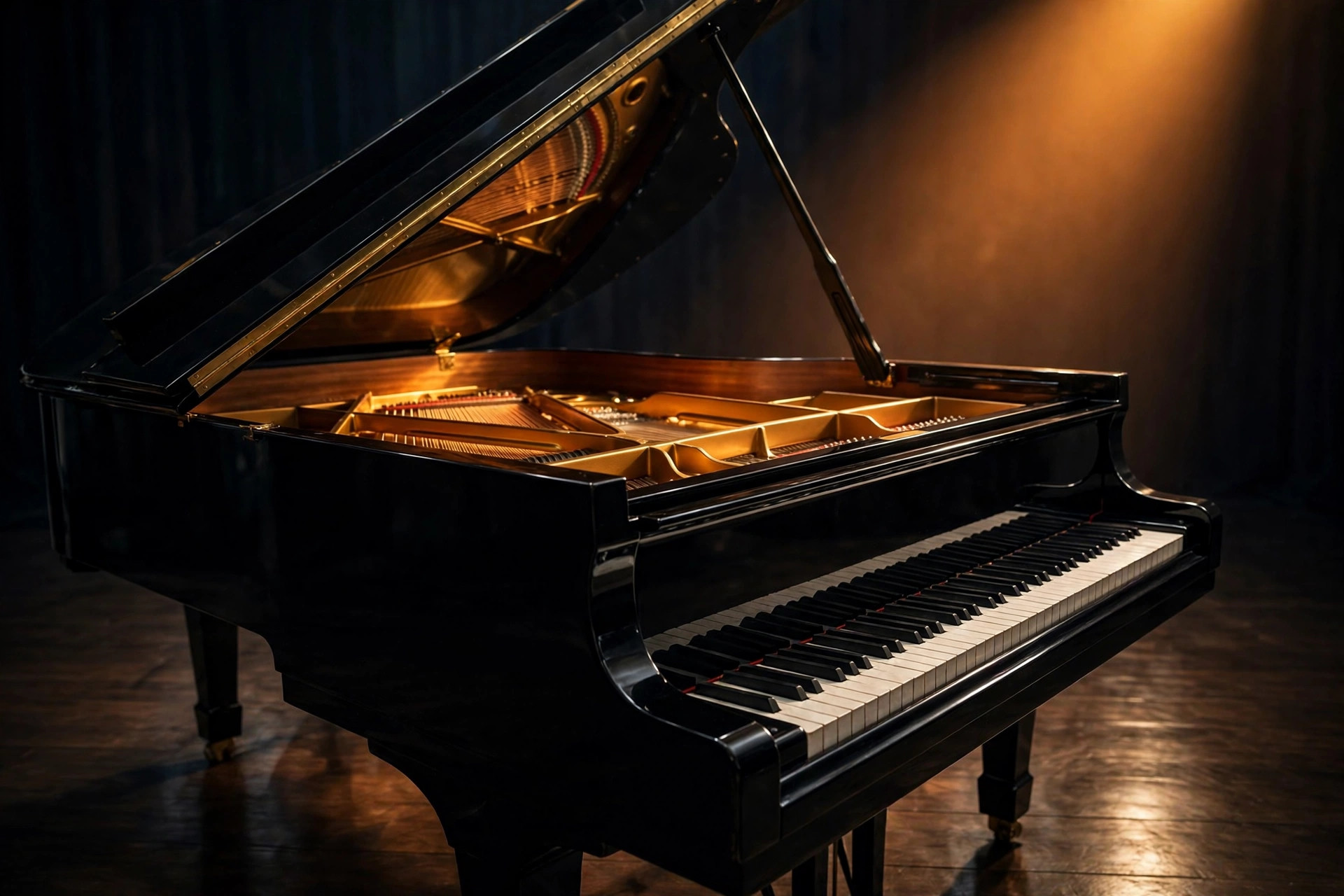
The instrument at the center of the work. Photographic plate from the Studio's own collection.
The short answer: music is heard before it is read. In this Studio's sound-before-sight approach, listening, imagination, theory, movement, and expression become one coherent path — the ear leads, and the page follows. A student who can hear a phrase can read it as a record of something known, instead of decoding it while trying to play it.
Decoding is not understanding
Musical understanding, the second pillar of the Patterson Arts Method, connects the ear, the score, and the musical story. A student can name every note on a page and still not know what the phrase is doing — where it breathes, where it is going, what it is trying to say. Hearing comes first because it answers those questions in the body before the mind has words for them. Theory then has something real to name.
What listening first changes in practice
Purposeful practice gets easier, not softer. When the sound is already in the ear, a practice session stops being repetition and becomes comparison: this bar, against the phrase I can hear; this voicing, against the balance I imagined. The student knows what to listen for and what to change — which is the whole definition of practice that counts. Twenty minutes of that will teach more than an hour of playing through and hoping.
The voice it protects
Technique matters most when it gives a person greater freedom to communicate. Listening first protects the reason for that freedom: the student's own musical voice. Two musicians who have truly heard the same nocturne will still say different true things with it, because they heard it as themselves. That is not a flaw in the method. That is the method working — an individual voice, formed by an ear that was trusted from the first lesson.
Study at the Studio
Personal piano and voice study in St. Augustine and live online, worldwide: private study, theory and aural training, composition, and invited masterclasses — with lessons and masterclasses on Steinway Model D concert grands. Placement begins with a conversation and a careful review, so the plan fits the musician, not the catalogue.
Begin with a placement review · Explore the Studio · The Patterson Arts Method