From the Studio · The Practice Room
The Practice Room: Step Two Is Process
Last Saturday, Step One put one phrase honestly into the hands: Learn. This week the Practice Room lived inside that phrase — played it for someone, let it rest in quiet, listened back, fixed the one true thing. Today the Method names what the week was actually doing. That was Step Two: Process.
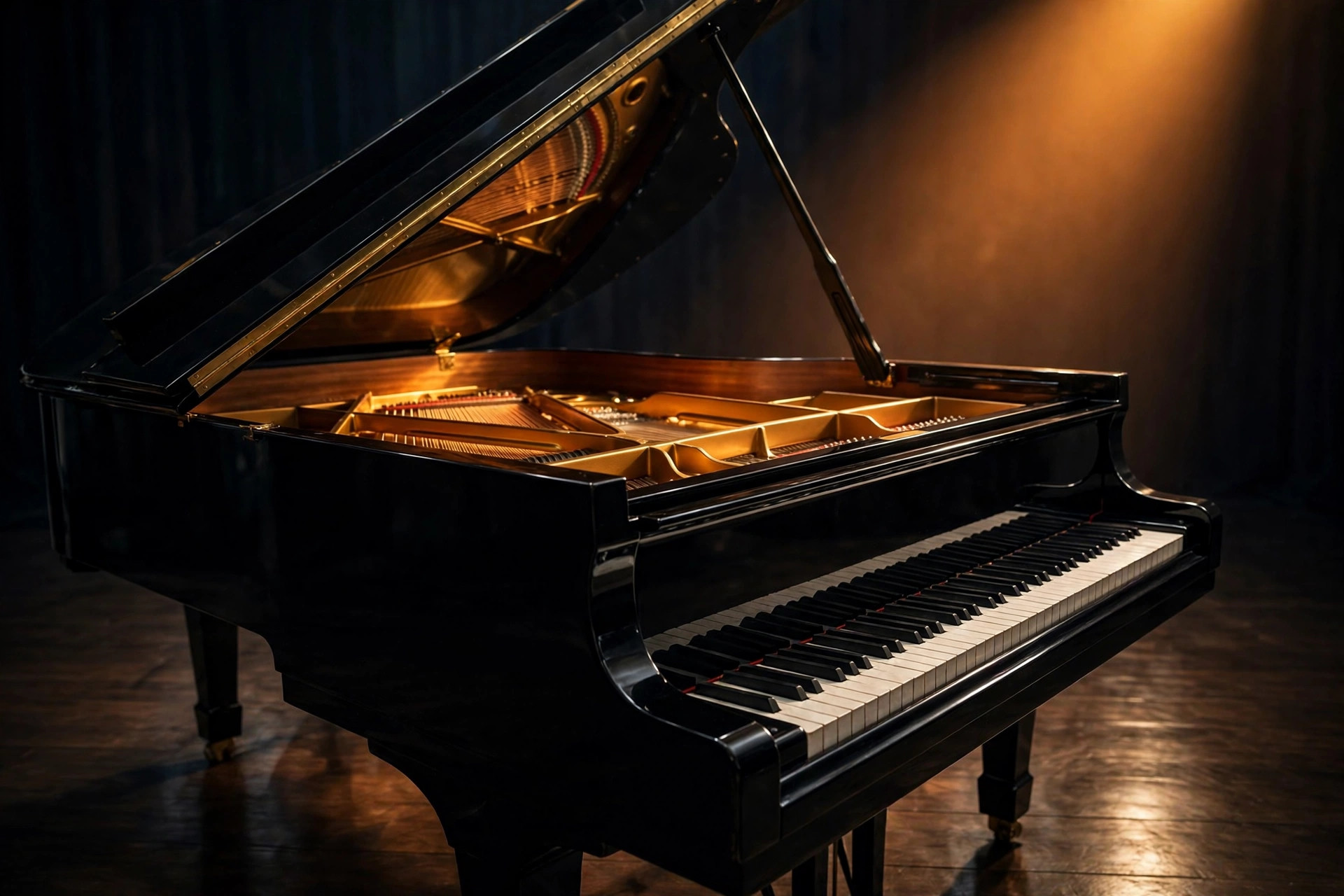
The instrument at the center of the work. Photographic plate from the Studio's own collection.
The short answer: learning puts the notes within reach; processing puts them within trust. Step Two is the slow middle of the Method — neither the excitement of first learning nor the freedom of having internalized — where the phrase is taken apart and reassembled at tempos the ear can govern, until accuracy stops requiring luck. It is the least visible step and the one every later step quietly depends on.
Process is repetition with attention
Mindless repetition is not Step Two; it is only time passing near a piano. Processing means each pass has a question: does the turn still rush, does the left hand still arrive late to its own idea, does the phrase still change character when the tempo rises by five? The week's work — listening back on Thursday, fixing one true thing on Friday — is the Method's processing loop in miniature: hear honestly, correct singularly, hear again.
Slow is a method, not a mood
Process lives at the tempo where nothing can hide. That is not humility theater; it is engineering. A passage played slowly enough exposes the exact joint where it will fail at speed, and a joint repaired at rest holds under pressure. The student who resents the slow tempo is resenting the diagnosis, not the treatment — and Step Two asks them to stay with the diagnosis until it stops being news.
Next Saturday: internalize
When processing has done its work, the phrase no longer needs to be supervised note by note — and that is next Saturday's step, Internalize, when the Method asks what it means for music to move from the hands into the person. For this week, one assignment: take the phrase you learned, and process it — slowly, with a question on every pass, until the ear stops flinching and starts listening for what the music means.
Study at the Studio
Personal piano and voice study in St. Augustine and live online, worldwide: private study, theory and aural training, composition, and invited masterclasses — with lessons and masterclasses on Steinway Model D concert grands. Placement begins with a conversation and a careful review, so the plan fits the musician, not the catalogue.
Begin with a placement review · Explore the Studio · Yesterday: Monday Begins Small