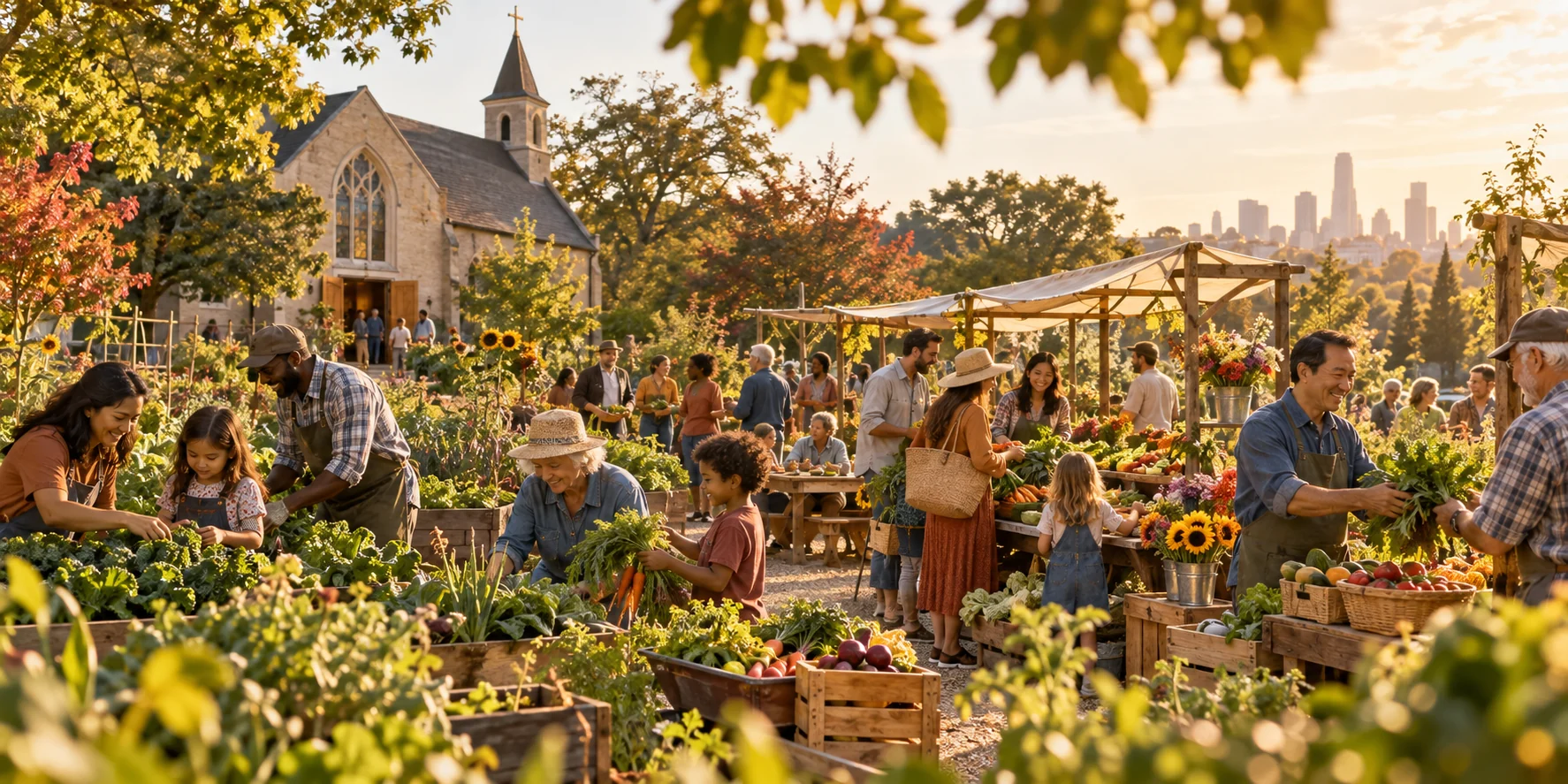
A gathering with purpose. A community drawn together.
Plan a seasonal festival, farmers market, or special event around the people you serve. This adaptable foundation helps your team make thoughtful decisions, share responsibility, and learn from the experience.
Consider Luke 14:12–14 and 1 Peter 4:10 in context as your team reflects on hospitality and service.
Who should this gathering serve, and what would make it worthwhile to them? Choose one primary purpose: neighborhood connection, local enterprise, family celebration, arts participation, or support for a specific ministry. Invite community voices into planning before choosing attractions.
02 / COMMUNITY GATHERING
Choose a format your church can sustain
A fall festival may emphasize family activities and hospitality. A farmers market needs a dependable vendor mix, repeatable logistics, and a clear visitor journey. A special event may center music, learning, or service. Adapt size, frequency, opening hours, and activities to your people, grounds, and capacity.
03 / COMMUNITY GATHERING
Walk the visitor journey
Map discovery, arrival, parking, welcome, participation, refreshments, restrooms, access needs, departure, and optional follow-up. Publish accurate information about admission, purchases, accessibility, weather arrangements, and children’s supervision. Avoid requiring contact information simply to attend.
04 / COMMUNITY GATHERING
Give each responsibility an owner
Name an event lead and owners for volunteers, vendors, site operations, communications, finance, accessibility, and incident response. Document decisions and escalation contacts. Plan breaks and substitutes. Use your church’s required volunteer preparation and safeguarding procedures.
05 / COMMUNITY GATHERING
Make the budget work
Separate fixed setup costs, per-event costs, and optional enhancements. Identify committed contributions before counting on hoped-for donations or vendor income. Record quantities and unit costs. Agree who can approve spending and how transactions will be reconciled.
06 / COMMUNITY GATHERING
Prepare the site and partners
Confirm the requirements that apply to your location and activities with the appropriate authorities, venue, and insurer. Agree vendor responsibilities, arrival times, space, electricity, cleanup, cancellations, and payment terms. Food, equipment, and children’s activities need suitable qualified review; this workbook is a planning tool, not an approval.
07 / COMMUNITY GATHERING
Invite with a truthful story
Explain who the event is for, what visitors can experience, and how it benefits the community. Give partners ready-to-share details. Obtain permission for identifiable photographs and stories. Make church identity visible without making participation conditional on religious engagement.
08 / COMMUNITY GATHERING
Measure and learn
Record attendance using a consistent method, participation, vendor feedback, volunteer workload, income and costs, and access barriers. Ask visitors what they valued and what should change. Compare the outcome with your purpose; attendance alone cannot describe every benefit. Decide whether to repeat, adapt, expand, or conclude.
Your congregation may copy and adapt this original guide for internal ministry use. Credit Mosaic; do not resell.
 CHURCH & COMMUNITY INSTITUTE